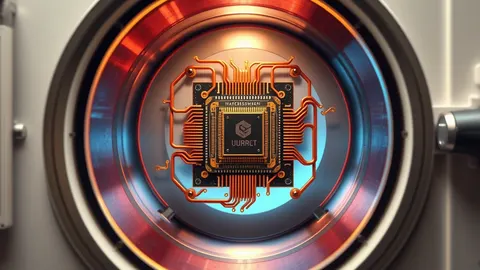
Google confirms practical magic state cultivation on Willow, cutting errors 40x with less overhead
Google Quantum AI confirms practical success of magic state cultivation, reporting a forty-fold decrease in errors on the Willow processor.
Key points
- Google Quantum AI demonstrated that magic state cultivation functions as an effective error-filtering routine.
- The process reduced physical qubit overhead significantly before the system scaled up further.
- Researchers characterise the result as a breakthrough that works in practice on current hardware.
Google Quantum AI has validated that magic state cultivation operates effectively on its Willow quantum processor. The team reported that this technique acts as an error-filtering routine, substantially reducing physical qubit overhead before scaling operations. This demonstration addresses a persistent resource bottleneck in quantum computing research, as TechSec Observer noted regarding Willow’s high fidelity metrics in October 2026.
Root cause
The challenge addressed involves managing error rates within quantum processors to enable scalable computation. Magic state cultivation serves as the mechanism to filter these errors. By applying this routine, researchers were able to lower the overhead required for physical qubits. This approach allows the hardware to maintain integrity during complex operations, moving theoretical error reduction into practical application on the Willow chip.
Attack path
This report concerns hardware performance and error management rather than a security vulnerability or attack vector. There is no exploit path, attacker, or malicious activity described in the source material. The focus remains entirely on the technical achievement of reducing computational errors through specific state management techniques on the quantum processor, without any mention of external threats or compromise.
Affected versions
The findings apply specifically to Google’s Willow quantum processor. The demonstration was conducted on hardware developed by Google Quantum AI. No other processors, software versions, or third-party systems are mentioned as being involved in this specific validation of magic state cultivation. The results are tied directly to the physical characteristics and operational capabilities of the Willow chip itself.
Mitigation
- Monitor hardware performance metrics to understand baseline error rates in quantum systems.
- Review supplier documentation regarding error-correction techniques and their practical efficacy.
- Assess whether current operational models account for physical qubit overhead requirements.
- Validate that theoretical error-reduction claims align with demonstrated hardware results.
What it means for organisations
Organisations investing in quantum computing should evaluate how error-reduction techniques impact their operational timelines. Teams usually need to review supplier claims regarding hardware capabilities against independent verification. Check whether your risk models account for physical qubit overhead and how error filtering affects scalability. Inform technical leaders about the distinction between theoretical limits and demonstrated practical performance. Ensure that procurement decisions reflect current hardware realities rather than future projections.
What to do and how to stay safe: Google Quantum AI
- Review current supplier statements about quantum hardware capabilities for consistency with demonstrated results.
- Assess internal risk models for dependencies on specific error-correction techniques.
- Monitor vendor updates for practical validations of theoretical performance claims.
- Ensure technical teams understand the distinction between lab results and production-ready hardware.
General security guidance from the TechSec Observer newsroom. It is not confirmed advice from the organisations named in this story.
Frequently asked questions
How much did errors decrease on the Willow processor?
Researchers reported that the process reduced errors by approximately forty times.
What technique was used to achieve this reduction?
The team used magic state cultivation, which acts as an error-filtering routine.
Does this apply to other quantum processors?
The source material only confirms this result for Google’s Willow processor.