DallasGrave's Custom Kit Reroutes RTX 5090 Power to Four 8-Pin Ports, Mitigating Heat Risks
A user-designed kit redistributes power load across four connectors to mitigate overheating risks on high-end Nvidia graphics cards, offering an alternative to standard adapters.
Key points
- DallasGrave showcased a custom quad 8-pin conversion kit for Nvidia RTX 5090 cards.
- The design bypasses the 16-pin connector, spreading load across four 8-pin PCIe inputs.
- This reduces current per pin, addressing heat buildup concerns in compact power interfaces.
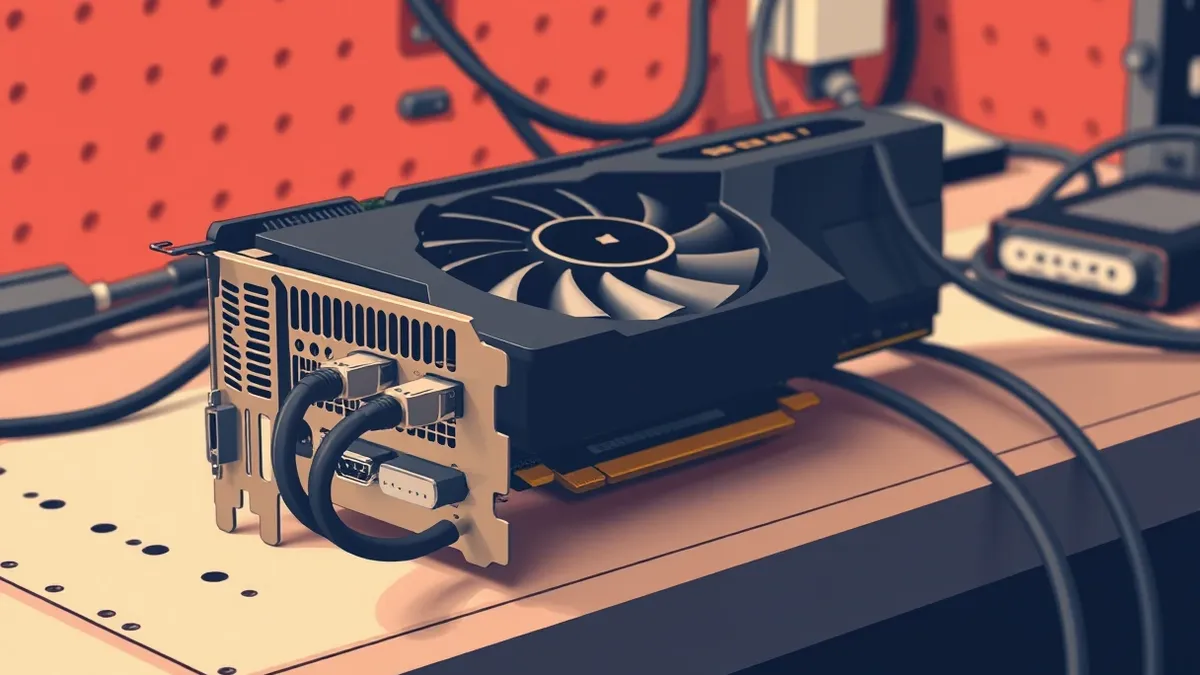
A custom hardware modification addresses power delivery issues on the Nvidia GeForce RTX 5090 graphics card. According to Tom's Hardware, Reddit user DallasGrave has demonstrated a quad 8-pin power conversion kit. This device targets the 16-pin (12VHPWR) and 12V-2x6 connectors, which have faced scrutiny regarding thermal failures. The modification aims to reduce the risk of melting by altering how electricity reaches the component.
Root cause
The 16-pin power connector channels high current through a compact physical space. PCI-SIG specifications rate each of its six power pins for a maximum of 9.5A. Delivering 600W requires approximately 8.33A per pin, approaching safety limits. This high current density in a small area creates significant heat buildup. The design concentrates electrical load, making the connector more prone to thermal stress compared to larger, standard interfaces.
Attack path
This is not a software exploit but a physical hardware limitation. The "attack" vector is the electrical load itself. When the card draws its maximum power, the tight pin pitch of the 16-pin connector struggles to dissipate heat efficiently. The custom kit intercepts this flow. It uses a harness soldered directly to the graphics card’s PCB power rails. This bypasses the problematic 16-pin connection entirely, routing power through a different physical pathway.
Affected versions
- Nvidia GeForce RTX 5090 graphics cards.
- Cards using the 16-pin (12VHPWR) power connector.
- Cards using the later 12V-2x6 revision of the connector.
Mitigation
- Install the custom quad 8-pin conversion kit to bypass the 16-pin connector.
- Ensure all four 8-pin PCIe power connectors are fully seated and secure.
- Verify that the power supply unit can deliver sufficient wattage across multiple lines.
- Monitor connector temperatures during high-load operations to detect anomalies early.
What it means for organisations
Organisations running high-performance graphics hardware should review their power delivery infrastructure. Teams usually assess whether standard connectors meet thermal safety margins under sustained load. Check whether vendor specifications align with actual physical constraints in your environment. Inform engineering and procurement teams about potential hardware modifications. Evaluate supplier reliability and consider alternative power solutions if standard connectors pose a risk. Document any non-standard hardware changes for maintenance and warranty purposes.
What to do and how to stay safe: Nvidia
- Inspect existing graphics card power connections for signs of heat damage or discoloration.
- Verify that power supply cables are rated for the required amperage and are fully inserted.
- Monitor system temperatures during intensive workloads to identify thermal trends.
- Consult with hardware vendors regarding long-term reliability of current power connector designs.
General security guidance from the TechSec Observer newsroom. It is not confirmed advice from the organisations named in this story.
Frequently asked questions
What is the purpose of the quad 8-pin mod?
It redistributes power load across four 8-pin connectors to reduce heat and melting risk on the RTX 5090.
How does this kit differ from standard adapters?
It is a direct-mount kit soldered to the PCB, bypassing the 16-pin connector rather than just adapting it.
What is the current rating per pin in the new configuration?
Distributing 50A across 12 pins results in approximately 4.17A per pin, half the load of the 16-pin design.