Slate Truck Owners Must Use USB Tether to Patch Vehicles Lacking Cellular Hardware
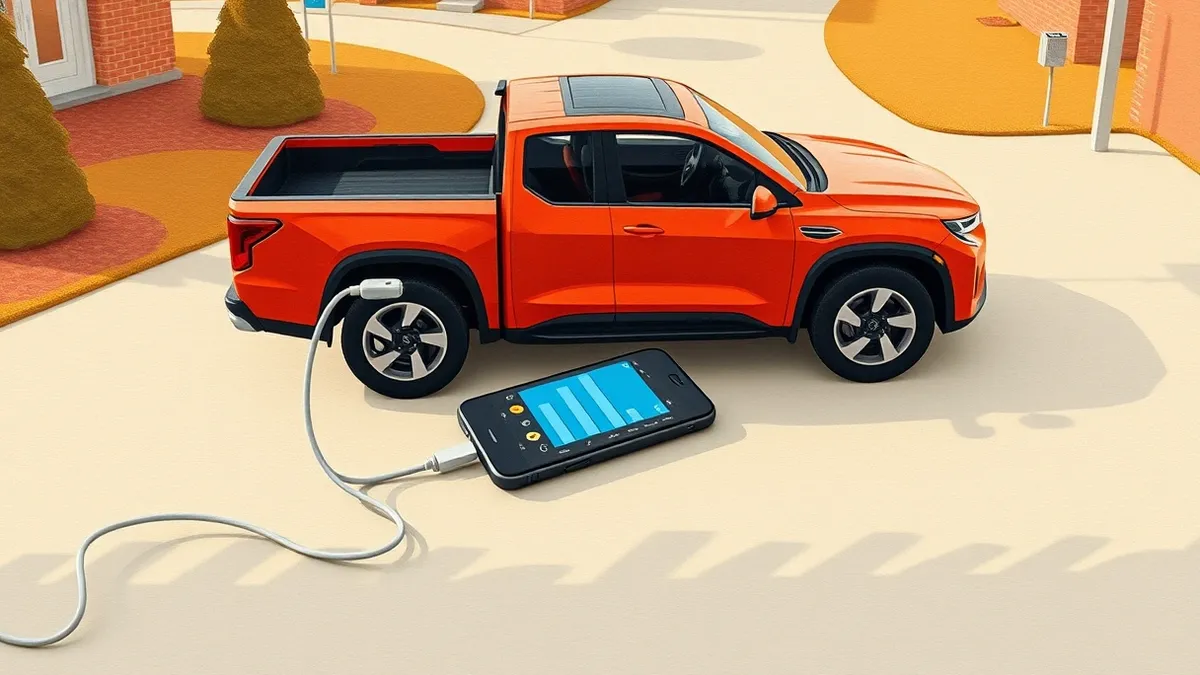
The electric truck lacks cellular hardware, requiring users to download software patches to their phones before transferring files through a dashboard port.
Key points
- Updates require a smartphone app to download files and a USB connection to the vehicle.
- The initial file transfer takes approximately one minute, followed by a 45-minute installation.
- The base model excludes infotainment, radio, speakers and built-in cellular connectivity.
Slate Auto has designed its electric truck to operate without built-in cellular connectivity, meaning over-the-air software updates rely entirely on the owner’s smartphone. According to Engadget, the vehicle’s minimal hardware configuration necessitates this manual workaround for maintaining system software. This approach affects individual owners who must actively participate in the update lifecycle rather than relying on automatic background installations.
Root cause
The absence of a dedicated telematics module or embedded cellular modem in the base vehicle model drives this update mechanism. Slate Auto achieves its sub-$25,000 entry price by removing non-essential components, including infotainment systems, radios, speakers and power windows. While optional add-ons like a telematics module exist, the standard configuration lacks the hardware required for direct network communication.
Attack path
The update process involves the Slate app downloading software files directly to the user’s mobile device. The owner must then physically connect their phone to the truck’s dashboard USB port to initiate the transfer. This wired connection is mandatory for the initial file transmission, which lasts about one minute. Afterward, the vehicle completes the installation autonomously, a process that can take around 45 minutes.
Affected versions
This update procedure applies to the base version of the Slate truck. The company states that these updates will focus on bug fixes and minor improvements rather than major feature additions. Vehicles equipped with optional telematics modules may have different capabilities, but the standard model relies on this smartphone-tethered method for all software maintenance.
Mitigation
- Use the Slate app to download available updates to the smartphone.
- Connect the smartphone to the truck's USB port to transfer the files.
- Wait for the vehicle to complete the installation process autonomously.
What it means for organisations
Fleet operators should assess how manual update processes impact vehicle availability and maintenance schedules. Teams usually need to establish clear protocols for who performs these updates and when. Check whether your asset management systems can track update status accurately without automated telemetry. Ensure staff understand the physical requirements for connecting devices to vehicles. This manual dependency introduces operational delays that require planning.
What to do and how to stay safe: Slate Auto
- Review your vehicle maintenance policies to account for the time required for manual software updates.
- Train drivers or technicians on the correct procedure for connecting smartphones to the vehicle’s USB port.
- Monitor the Slate app for notifications regarding available bug fixes and safety improvements.
- Consider whether optional telematics modules are necessary for your operational security and convenience needs.
General security guidance from the TechSec Observer newsroom. It is not confirmed advice from the organisations named in this story.
Frequently asked questions
Does the Slate truck have built-in cellular connectivity?
No, the base version of the Slate truck lacks built-in cellular hardware, requiring updates via smartphone tethering.
How long does the software update process take?
The initial file transfer takes about one minute, and the installation process can take around 45 minutes.
What components are missing from the base Slate truck?
The base model skips an infotainment system, radio, speakers, power windows and even a paint job, using vinyl instead.