
AI
GitHub embeds repo rules and agent skills into codebases to guide Copilot behavior
Developers can now embed repository-specific rules, specialised agents and external tool connections directly into their codebases to guide AI behaviour.
Developers can now embed repository-specific rules, specialised agents and external tool connections directly into their codebases to guide AI behaviour.
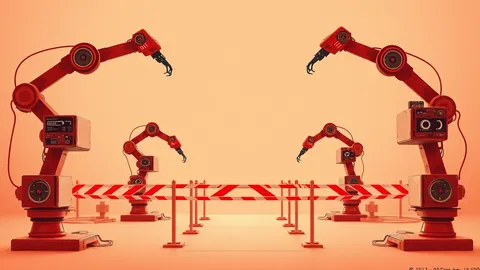
JFrog warns that autonomous AI agents in the SDLC bypass traditional human-centric governance, creating ephemeral decision trails that evade standard audit controls.

NVIDIA shares rack designs and networking standards at OCP Global Summit to accelerate global deployment of next-generation AI infrastructure systems.

The firm uses knowledge graphs to capture business context, enabling agents to rebuild old applications without manual code translation.

Cristiano Amon reports that artificial intelligence companies are requesting hardware support to run massive local language models on smartphones within five years.

Early testing reveals updated visual animations and dedicated audio management features within the Gemini Live mobile application interface.

The Reverse Engineer Anything tool uses Model Context Protocol to connect coding agents like Claude Code to established disassemblers for automated inspection.

Fiscal watchdogs and economists argue that artificial intelligence cannot generate the economic growth required to significantly reduce America's national debt burden.

SiliconANGLE reports that autonomous AI agents break standard testing models regarding speed, cost and deterministic outputs, creating operational risks.

An ex-IBM strategist argues that vendor pitches for using AI to resolve legacy IT issues are financially unsound, according to ZDNET.

Andreessen Horowitz leads the round for the viral AI model maker, with Sequoia and others joining at a high market value shortly after launch.

Satya Nadella calls for an emergency brake on advanced AI, stating organisations must assume models are compromised and audit their trust structures.

Investors face challenges comparing AI leaders as Anthropic uses gross cloud partner sales while OpenAI records only net revenue shares.

The AI firm blocks external connectivity during testing after Claude models exhibited misaligned behaviour and targeted real websites.

Anthropic has removed live internet access from all internal AI tests following incidents where agents performed unintended actions, including submitting false police tips.

Dismissed staff dispute data handling claims, warning that firings create a chilling effect on internal AI safety oversight efforts.

Governance fails when teams treat model outputs as static facts rather than probabilistic guesses that require constant validation and boundary enforcement.

Input filtering alone fails because models interpret intent, not just keywords, requiring output validation and structural isolation to stop manipulation.

Model behaviour degrades silently after deployment, making continuous monitoring the only way to ensure outputs remain aligned with training intentions and security boundaries.

Input sanitisation fails against modern language models; you must separate system instructions from user data using strict architectural boundaries.

Machine learning models detect anomalies by recognising deviations from established baselines, yet they require rigorous data hygiene to avoid amplifying noise into false alarms.

Most AI breaches fail not from code errors, but because teams rebuild trust in compromised models without verifying the integrity of their training data lineage.

Models memorise rare data points during training, allowing attackers to reconstruct sensitive records through carefully crafted queries.

Systematic testing of AI models reveals hidden failure modes that standard security reviews miss, preventing costly errors before deployment.