Warning Signs of Tax Identity Theft and How to Respond
Tax identity theft often manifests as unexpected tax filing rejections or unexplained changes to your direct deposit details rather than visible fraud on bank statements.

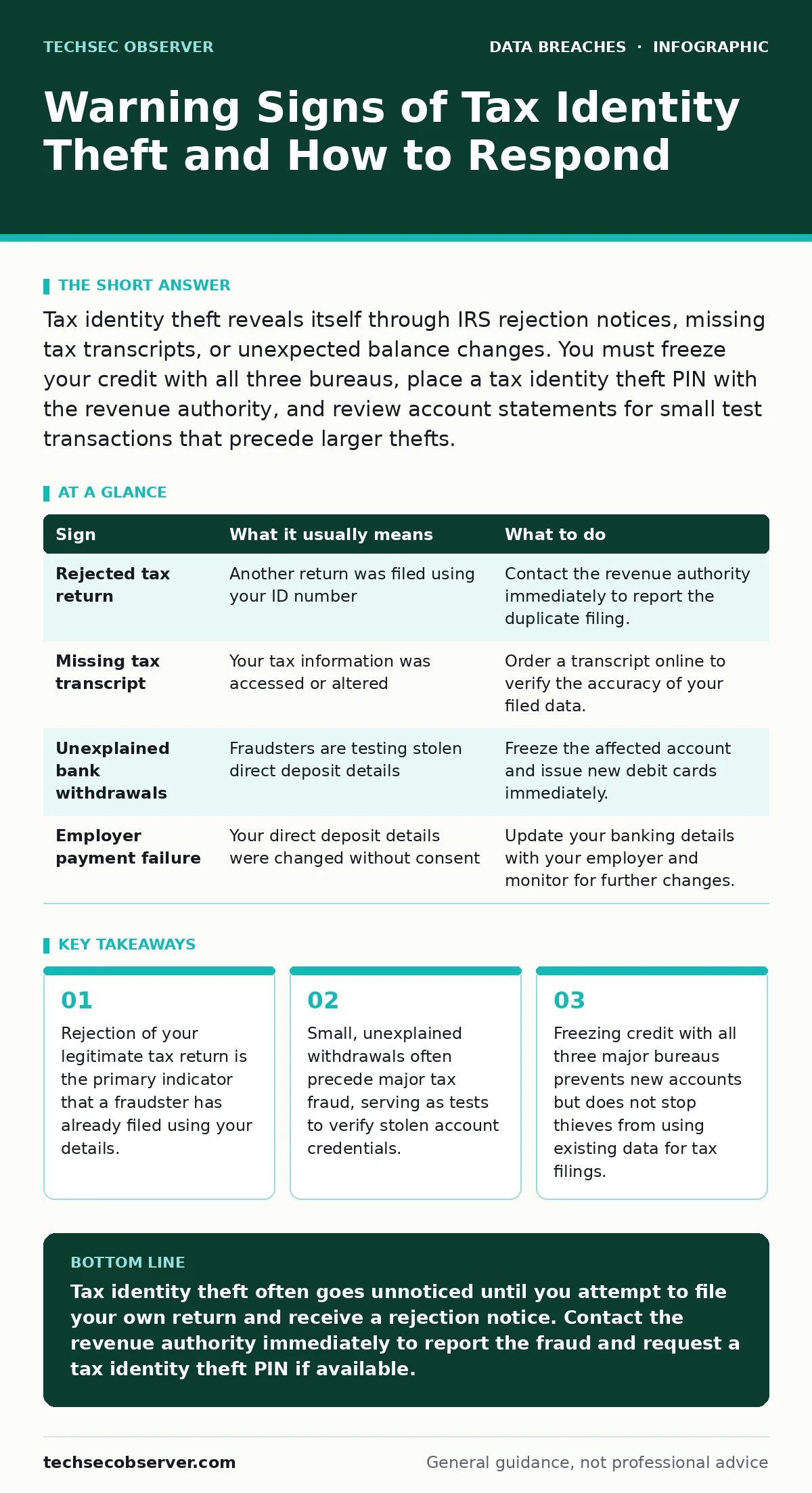
Tax identity theft reveals itself through IRS rejection notices, missing tax transcripts, or unexpected balance changes. You must freeze your credit with all three bureaus, place a tax identity theft PIN with the revenue authority, and review account statements for small test transactions that precede larger thefts.
Immediate Indicators of Tax Identity Theft
Tax identity theft often begins with a simple notification from the revenue authority. You receive a notice stating that your tax return was rejected because another return was already filed using your taxpayer identification number. This is the most common first sign. The system flags the duplicate submission, but the fraudulent return may still be processed if the fraudster acts quickly. You cannot file your legitimate return until the duplicate is resolved. This creates a delay that can impact your financial planning and cash flow. The rejection notice serves as an automated alert mechanism within the tax administration system.
Subtle Signs That Are Easy to Miss
Tax identity theft often proceeds without any notification from the revenue authority. Fraudsters may file a return but not claim a refund, instead using the filing to create a paper trail for future loans. You might notice small, unexplained withdrawals from your bank account. These are often test transactions to verify that the stolen direct deposit details are valid. Larger fraud follows once the connection is confirmed. Another subtle sign is a change in your direct deposit instructions on file with your employer. If your paycheck is deposited into an unknown account, report it immediately. This indicates that your personal data has been compromised and altered.
Understanding the Mechanism Behind the Theft
Tax identity theft relies on the aggregation of personal data from multiple sources. Fraudsters combine stolen names, addresses, and identification numbers to create a plausible identity. This process is distinct from simple account takeover. It requires specific data points that are often stored in less secure environments. Imagine a scenario where a data breach exposes your employment records. The fraudster uses this information to file a false tax return. They do not need to hack the tax authority directly. They only need enough verified data to pass the initial automated checks. This makes prevention dependent on securing your personal data at the source.
| Sign | What it usually means | What to do |
|---|---|---|
| Rejected tax return | Another return was filed using your ID number | Contact the revenue authority immediately to report the duplicate filing. |
| Missing tax transcript | Your tax information was accessed or altered | Order a transcript online to verify the accuracy of your filed data. |
| Unexplained bank withdrawals | Fraudsters are testing stolen direct deposit details | Freeze the affected account and issue new debit cards immediately. |
| Employer payment failure | Your direct deposit details were changed without consent | Update your banking details with your employer and monitor for further changes. |
The Limitations of Credit Freezes
Many individuals believe that freezing their credit stops tax identity theft. This is a common misconception. Credit freezes prevent new accounts from being opened in your name. They do not stop a fraudster from using your existing identification number to file a tax return. The revenue authority does not check credit reports when processing tax filings. Therefore, a credit freeze provides no protection against this specific type of fraud. You must take additional steps beyond freezing your credit. These steps involve directly securing your relationship with the tax authority and monitoring your existing financial accounts for unusual activity.
Placing a Tax Identity Theft PIN
Some revenue authorities allow you to place a special PIN on your tax account. This PIN is required to file a tax return or claim a refund. If you suspect your data has been compromised, you can request this PIN. Only you will know the code. Any attempt to file a return without this PIN will be rejected. This adds a layer of authentication to the filing process. It is not available in all jurisdictions, but where it exists, it is a powerful tool. It shifts the burden of proof to the filer. You must remember the PIN, as losing it can delay your legitimate filing.
See also: Synthetic Identity Fraud Meaning: How Fabricated Identities Evade Detection
Responding to Detected Fraud
When you detect tax identity theft, time is a critical factor. You must contact the revenue authority to report the fraudulent filing. They will place a hold on the fraudulent return and investigate. You should also place a fraud alert on your credit files. This notifies lenders to verify your identity before extending credit. Review your bank statements for any unauthorized transactions. Change your passwords for all financial accounts. Consider using a password manager to generate unique credentials. Do not reuse passwords across different services. This limits the damage if one account is compromised. Follow the guidance on data breach response plans to contain the incident effectively.
Preventing Future Compromise
Prevention requires a proactive approach to data management. You should limit the amount of personal information you share online. Review your data retention policies to ensure that old documents containing sensitive information are destroyed securely. Use multi-factor authentication on all accounts that store personal data. This adds an extra layer of security beyond just a password. Be wary of phishing attempts that ask for your tax information. Legitimate agencies do not request sensitive data via email. Verify the source of any communication before responding. Understanding the basics of digital forensics can help you identify how your data was compromised in the first place.
The Role of Synthetic Identities
Tax identity theft is sometimes part of a larger scheme involving synthetic identity fraud. This involves combining real and fake information to create a new identity. The fraudster uses your real identification number but pairs it with a fake name or address. This makes the fraud harder to detect. The identity may remain dormant for years while the fraudster builds a credit history. Once the credit score is high enough, they take out loans or file false tax returns. You may not notice the fraud until it is too late. Regular monitoring of your credit report and tax transcripts is the only way to detect this slow-moving threat.
Key takeaways
- Rejection of your legitimate tax return is the primary indicator that a fraudster has already filed using your details.
- Small, unexplained withdrawals often precede major tax fraud, serving as tests to verify stolen account credentials.
- Freezing credit with all three major bureaus prevents new accounts but does not stop thieves from using existing data for tax filings.
Tax identity theft often goes unnoticed until you attempt to file your own return and receive a rejection notice. Contact the revenue authority immediately to report the fraud and request a tax identity theft PIN if available.
Frequently asked questions
Can a credit freeze stop tax identity theft?
No, credit freezes prevent new accounts but do not stop fraudsters from using your existing ID number to file tax returns.
How long does it take to resolve tax identity theft?
Resolution times vary significantly depending on the complexity of the case and the backlog at the revenue authority.
Should I file my taxes if I suspect fraud?
You must file a paper return if your electronic return was rejected due to a duplicate filing.
What is a tax identity theft PIN?
It is a special code you set with the revenue authority that must be included in any tax return filed in your name.
How this guide was produced: written by the TechSec Observer editorial team with AI assistance, checked against the public references listed below, and reviewed when the facts change. See our editorial policy or report an error.